The Canopy Transit Hall
-2026-01-27-at-15_31_04.jpg)
The North Star of Aviation
02/
Type
Transportation Hub
180,000 sq ft
Size
2035
Completed
Helsinki, Finland
Project Story
A timber transit hall conceived as a sweeping forest canopy, offering travelers a calm, daylight‑filled threshold between city and landscape where movement, pause, and orientation are all shaped by warm, sculpted wood.
DESIGN TEAM
Elina Korhonen (Lead), Matteo Rossi,
Lina Alvarez
PHOTOGRAPHY
Nordic Hey-Frame Studio
year
2035
The Brief
The regional transport authority sought a new intermodal hub that could consolidate rail, bus, and airport connections into a single, legible place. Rather than a purely infrastructural building, they asked for an uplifting civic room that reflects the country’s relationship to its forests and sets a new benchmark for low‑carbon public architecture. The hall needed to handle high passenger volumes with intuitive wayfinding, clear sightlines to platforms and exits, and a robust material palette capable of absorbing intensive daily use.
The Approach
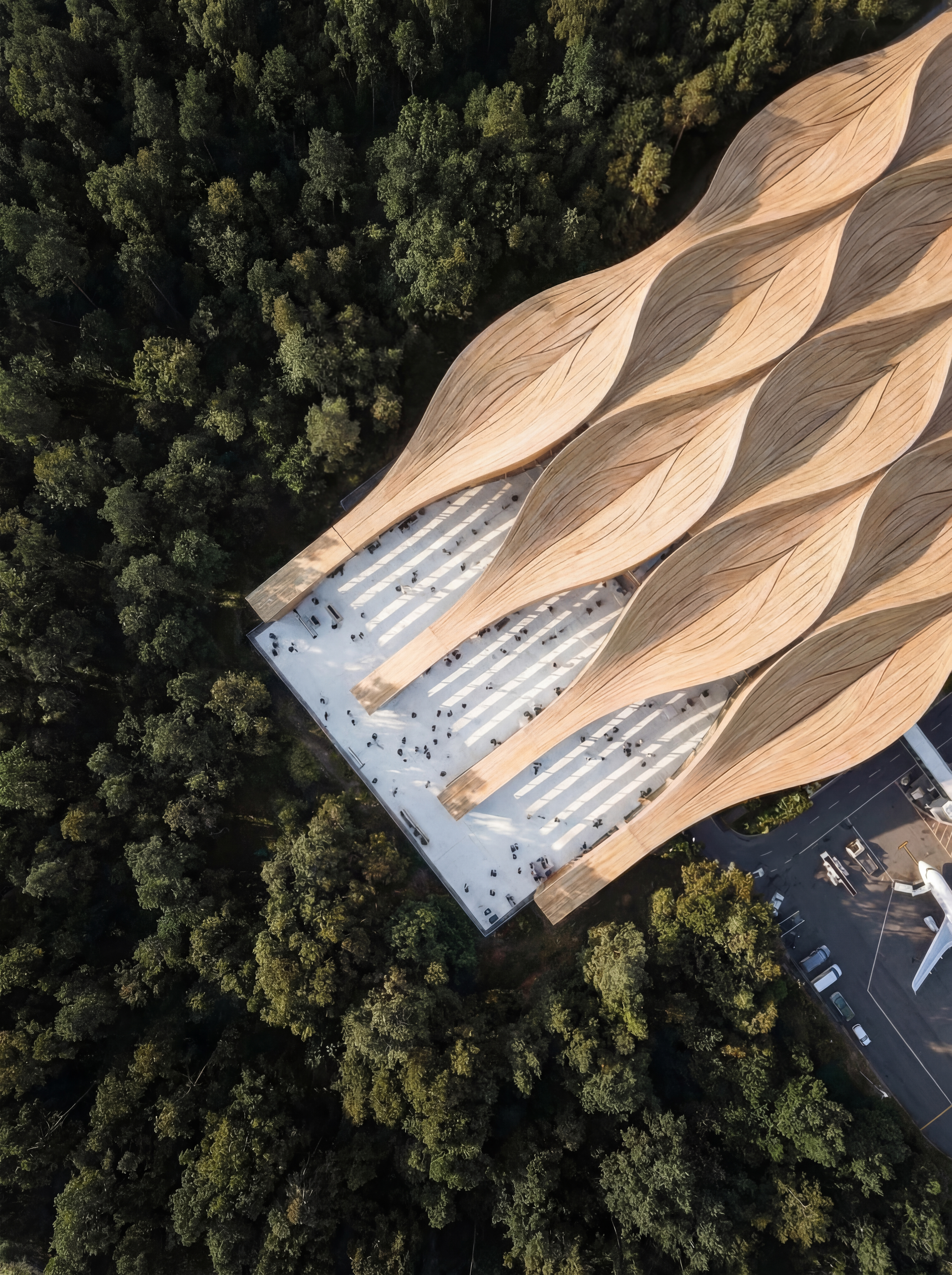
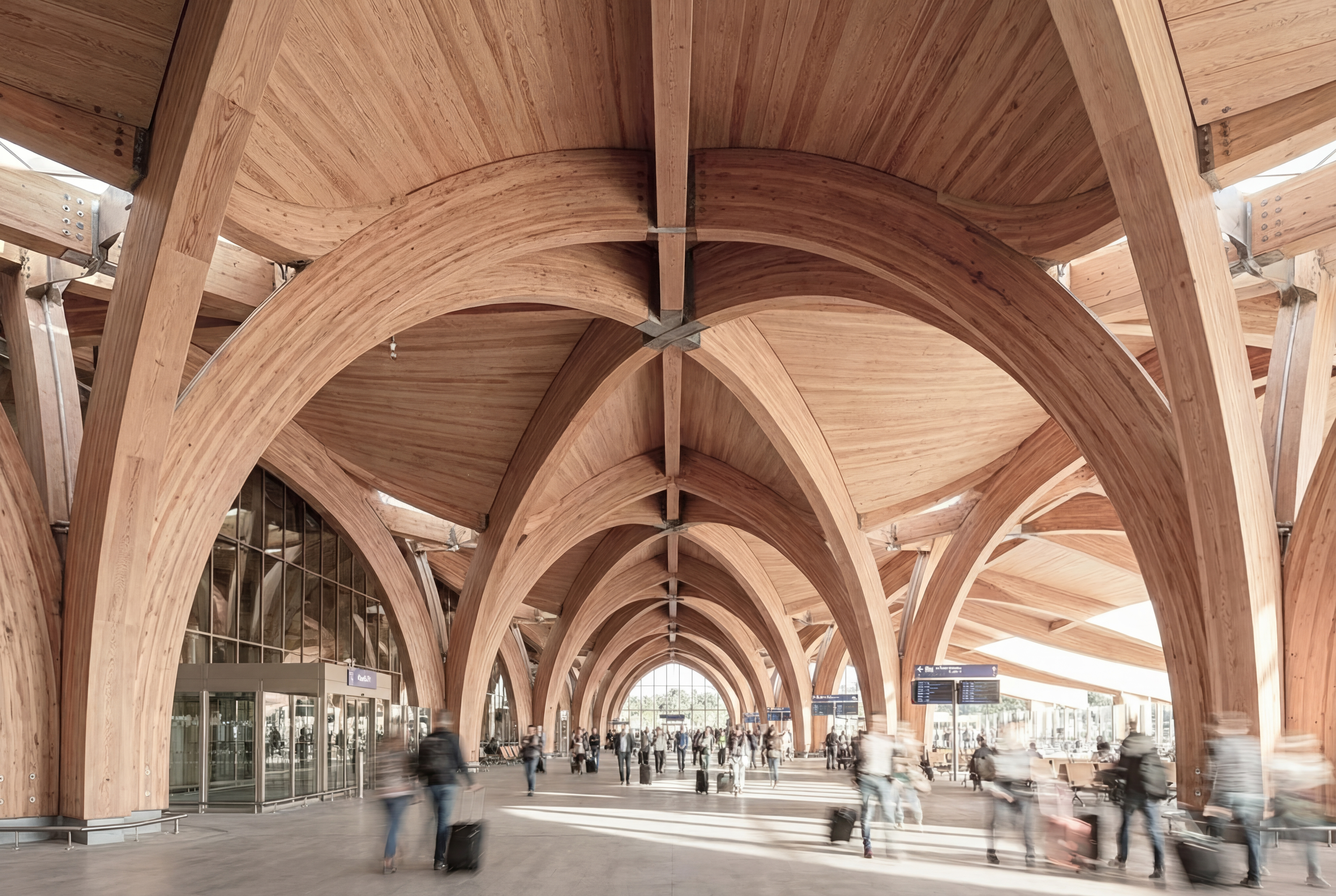
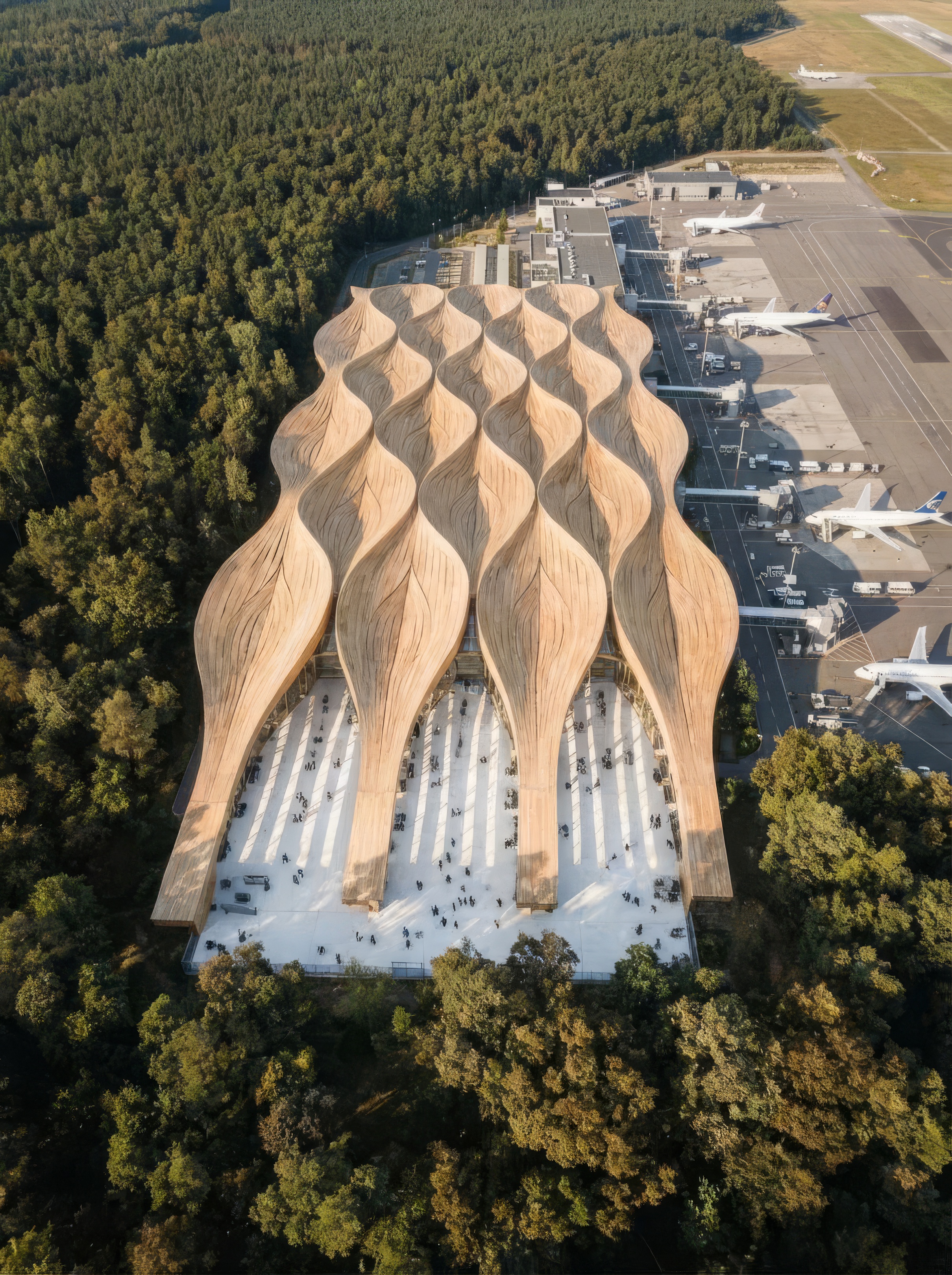
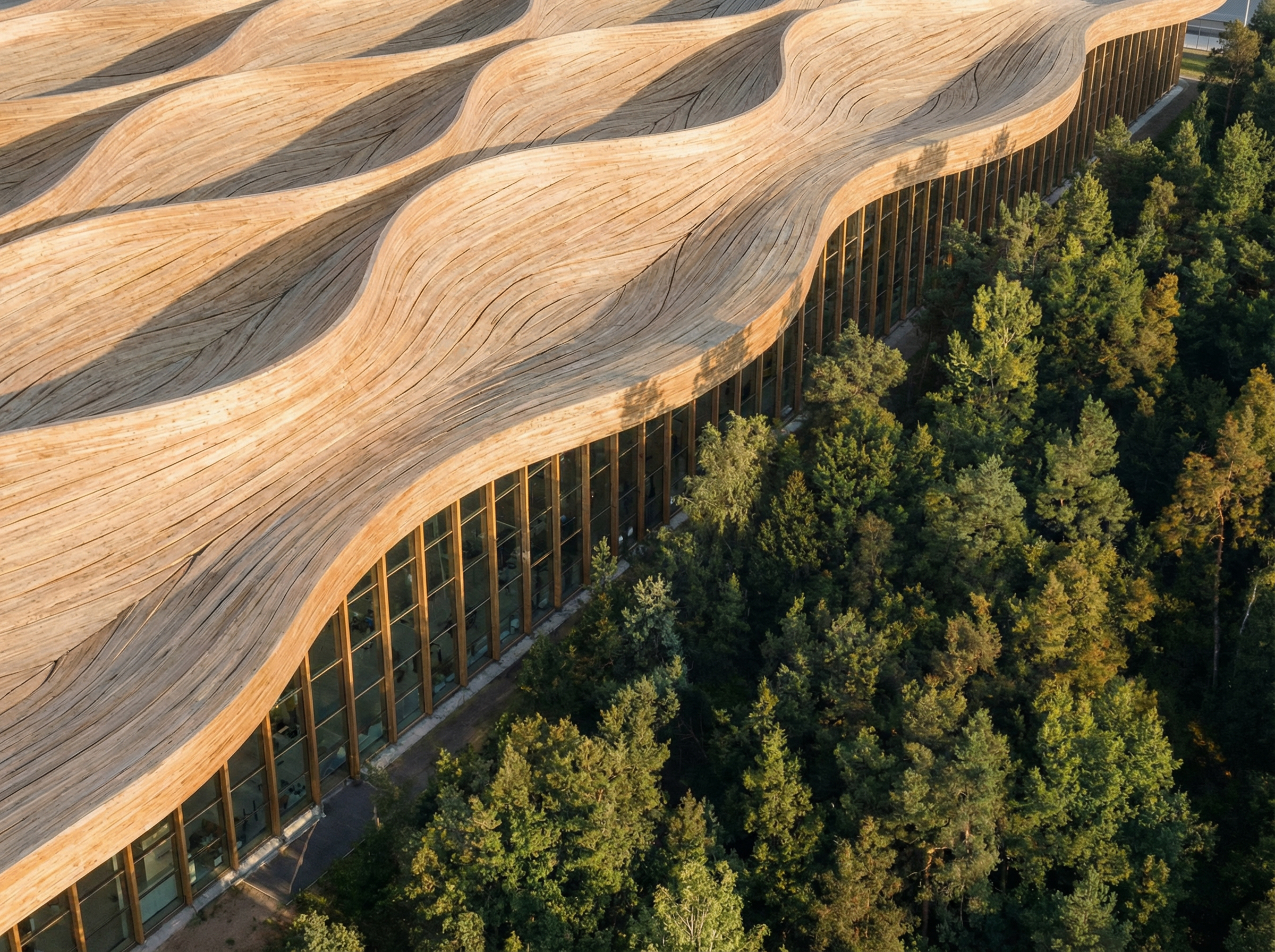
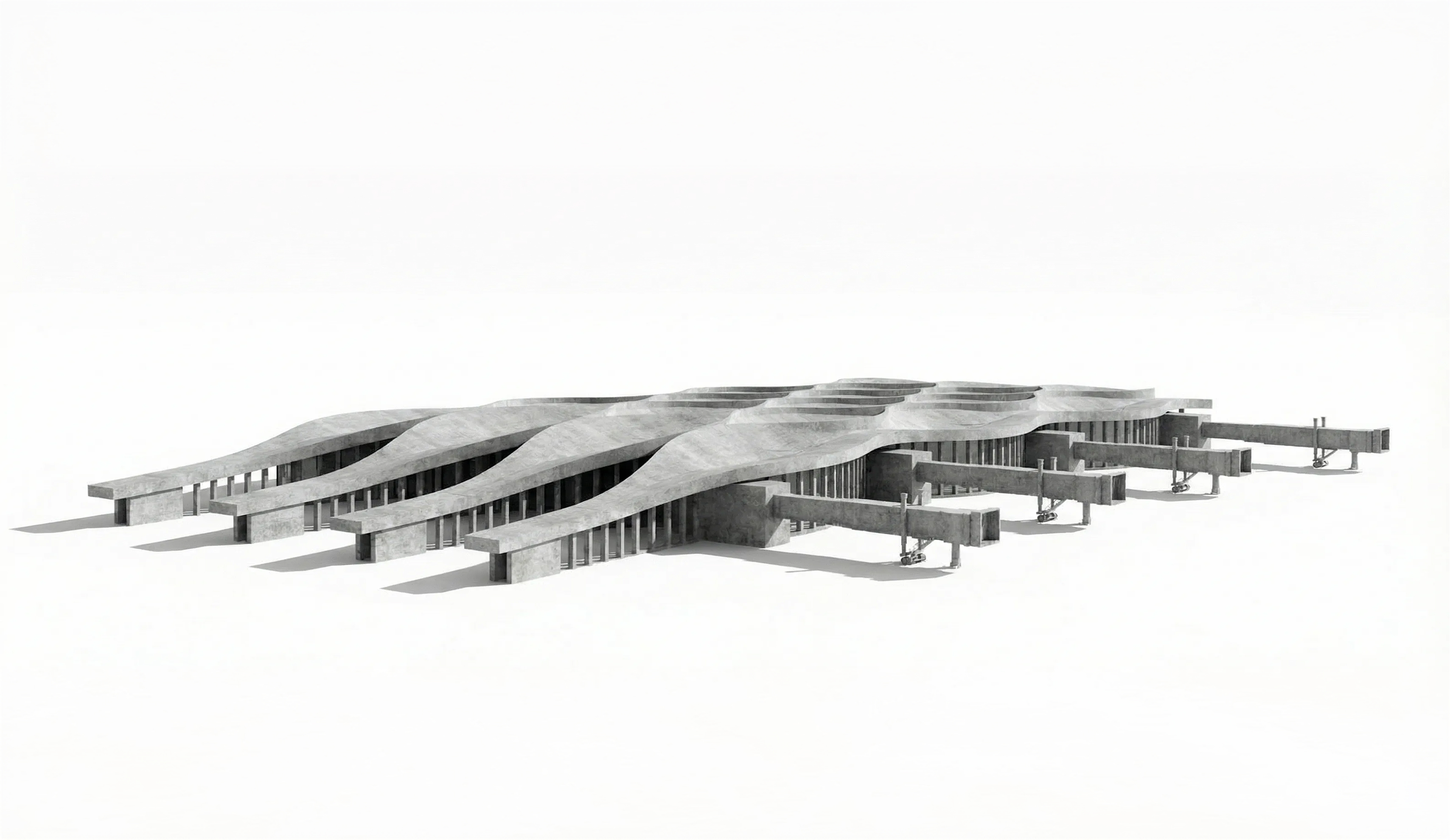
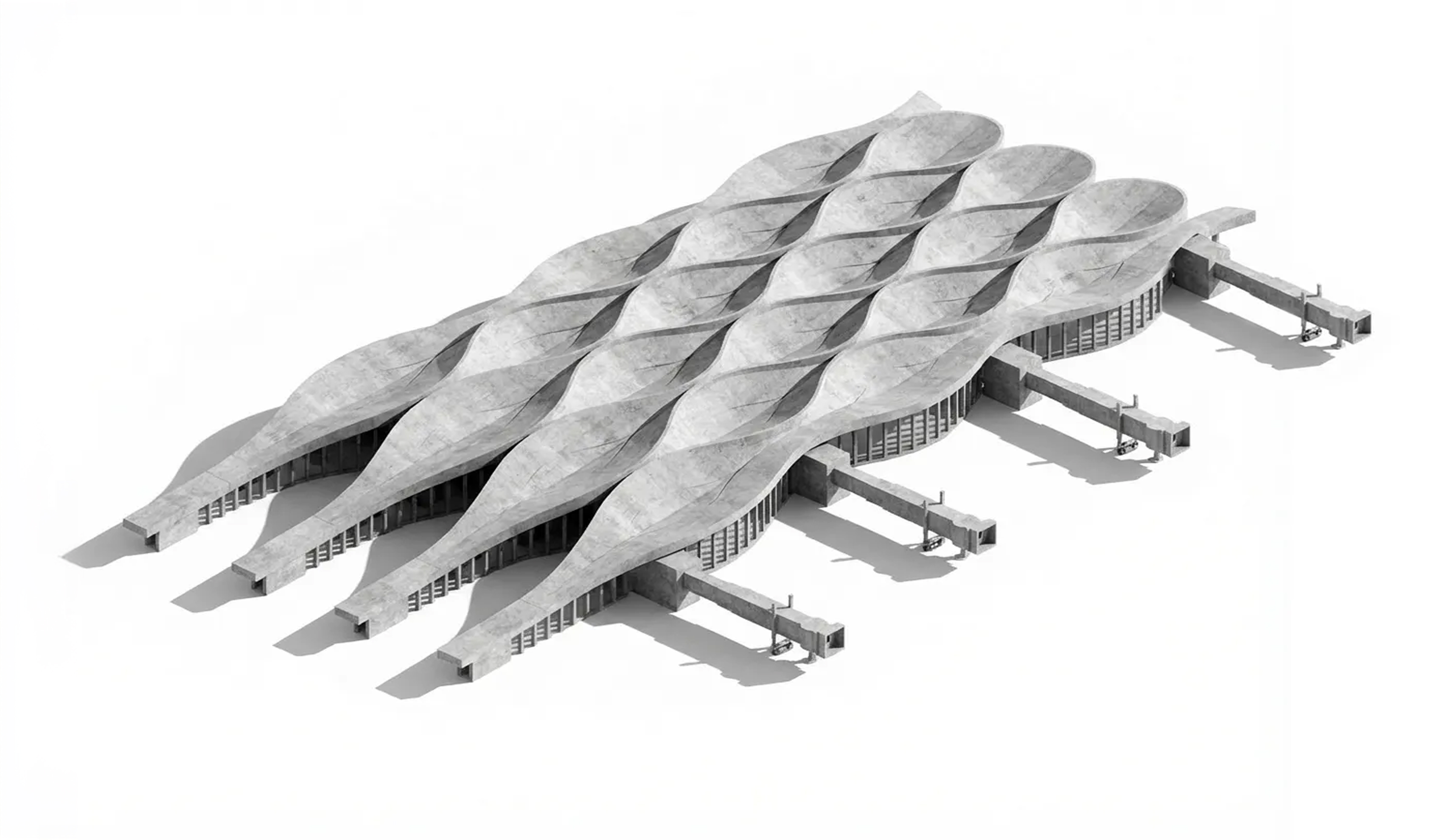
We responded by treating the roof as the project’s primary architectural gesture: a series of interlocking timber “leaves” that sweep from the forest edge toward the forecourt, visually pulling the surrounding landscape over the building. Inside, branching arches span the full width of the hall, organizing circulation into clear bands for arrivals, departures, and cross‑traffic. Natural light filters through discreet skylights between the leaves, creating a soft, evenly lit interior that changes with the time of day. Program elements - ticketing, retail, waiting lounges - are nested between the structural ribs, creating a porous edge condition that keeps the central concourse open and legible.
The DETAILS
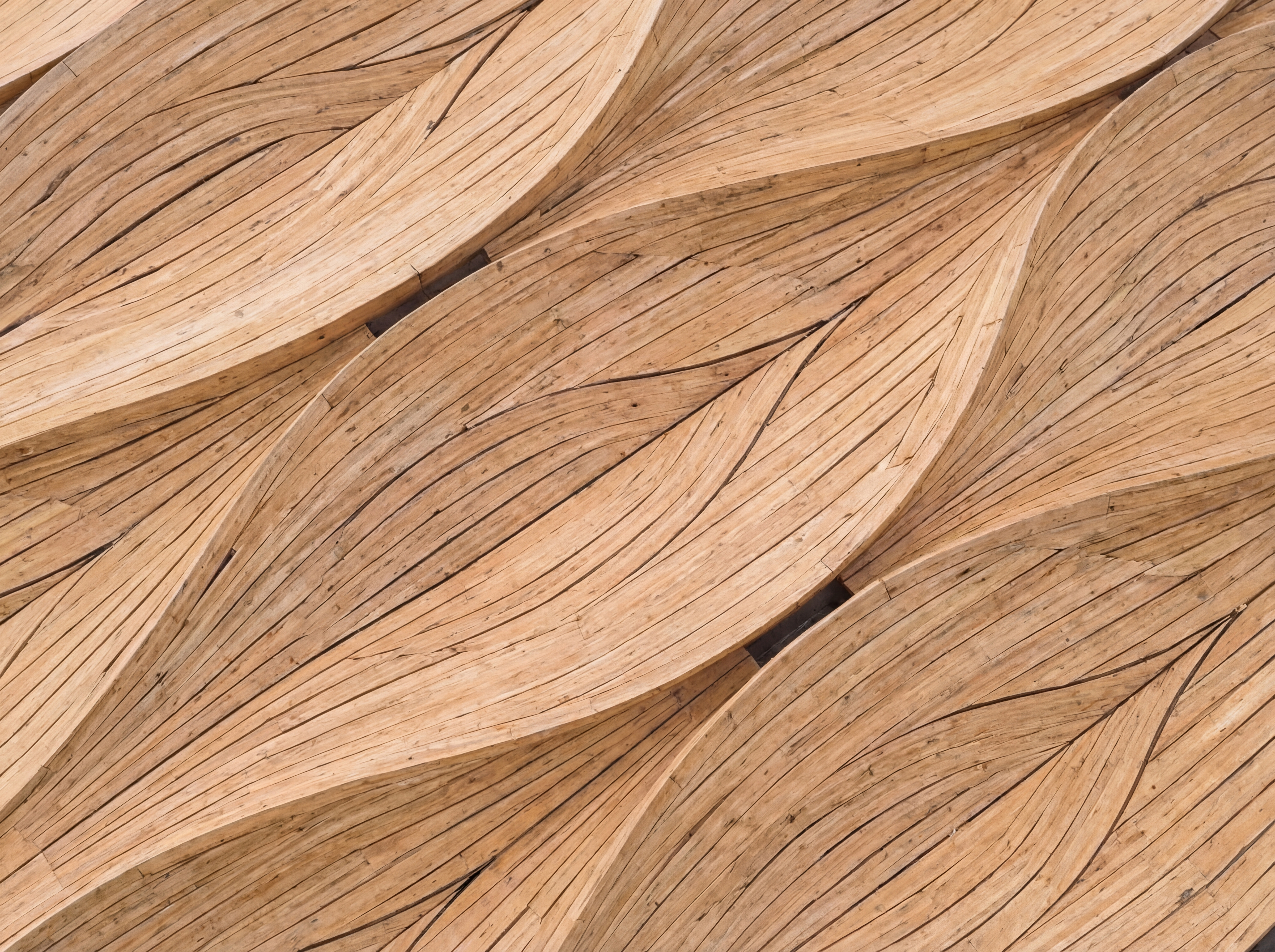
The roof is built from prefabricated laminated timber panels, CNC‑milled to create the flowing grain patterns visible on the soffit and undersides of the “leaves.” Moment connections and concealed steel plates enable long, graceful spans while preserving the warmth and tactility of wood at the pedestrian level. A high‑performance envelope and deep overhangs control solar gain and protect the timber from weather, while an exposed concrete plinth provides durability at the ground plane. Integrated signage, acoustic baffles, and linear lighting are all coordinated with the rhythm of the arches, reducing visual clutter in the busy hall. The result is a quietly dramatic space where the structure, circulation, and identity of the station are one and the same.